My passion for literacy and equitable educational practices started out as a spark, long before I was even aware of these terms as concepts in the context of education. I attended public school in British Columbia the mid 1970s to late 1980s, and I have some pretty vivid memories from that time. One of those memories is from when I was a peer tutor during my high school years. As peer tutor, I noticed that many of the peers I supported could understand the grade-level textbooks and novels that I read to them, but they struggled so much to read the words themselves. I wondered why they could tell me what they understood, but they couldn’t write the words that they spoke. I realized that many of these peers also struggled to stay engaged in the classroom. These were often the students who skipped class or who were asked to leave due to their off-task or disruptive behaviour.
After graduating from university, I worked as a facilitator in a community pre-employment program with young adults who faced multiple barriers (e.g. housing, food, and employment security; mental and physical health concerns; etc.), and later, as a high school career advisor. In both of these roles, I noticed that sub-literacy (i.e. difficulty functioning in school and society due to challenges with reading and/or writing), was a common factor for the majority of the young people who struggled with school and many other aspects of life, regardless of socio-economic status. Some dropped out of school, some were placed in courses that did not prepare them for post-secondary training options, and many presented with challenging internalizing and/or externalizing behaviours that added to their academic challenges. I just couldn’t understand how these young people, who often had many other strengths, were unable to develop the foundational academic skills they needed. The questions I had about literacy, learning and equity grew from a spark, into a flame.
When I made the decision to become a teacher, I knew I wanted to help make school a place where all students could thrive and belong. I was especially interested in learning about literacy, as I already had a sense that this was a key contributor to success at school, and in life. I specialized in learning disabilities during my teacher education program in the late 1990s, and then completed a two year post-baccalaureate diploma in inclusive education soon after I started teaching. I learned a lot, but I didn’t really get the answers I was seeking about the literacy challenges so many of my students presented with.
For over a decade, I worked hard as teacher, often collaborating with colleagues and parents, to address the barriers that many of my students faced. It was very apparent to me that the students who struggled to acquire and demonstrate foundational academic skills (i.e. reading, writing and mathematics), also often struggled with social-emotional skills. Indeed, these factors seemed to reinforce each other. I continued my learning, taking every professional development opportunity I could to better support diverse learners and I learned even more from doing the actual work with students. All of this was fanning the flames.
Almost all my time as a classroom and special education teacher occurred when public education in British Columbia saw deep cuts stemming from the 2002 changes to the teachers’ union contract language, which would eventually be deemed unlawful by the Supreme Court of Canada in 2016. Teaching in the BC education system wasn’t perfect before January 2002, but what was already a difficult job, became even more difficult with the changes and cuts that were made. I saw colleagues lose or walk away from their positions, caseloads increase drastically, and gaps widen.
During my 13 years as a teacher, I learned how hard it is to engage, teach, and assess diverse learners who have cognitive, academic and social-emotional abilities ranging from a primary level to university level, often in one classroom. I learned about the countless hours, often outside of the regular work day, involved in creating Individual Education Plans for students who have designated special needs, and informal plans for so many more who clearly need support, but didn’t meet the criteria for designations in our school system. I learned how to get by with unmanageably high caseloads, and how to live with the tremendous guilt that came from knowing the plans I created and co-created with my colleagues often did not fully address students’ needs, particularly when it came to actually improving the foundational literacy and numeracy skills that they so often lacked. I learned how overwhelming and impossible it is to create education assistant schedules with too few staff, recognizing that some of those staff have no training or experience. I learned how it feels to lie awake at night, wondering what more could be done to support students who try to cope with their repeated academic failures in increasingly challenging (and often harmful) ways. Ultimately, I learned that your best efforts just aren’t enough sometimes, and this just added fuel to the fire.
Refusing to walk away from public education or to give in to the waves of hopelessness that came over me at times, I started working toward a masters degree in school psychology, while continuing to teach. Working directly with students while doing my coursework allowed me to keep my focus on making improvements for the students who struggled to have success at school, and slowly, I began to see how I could affect systemic change through a new lens. Grounded in relationships and human connection, it was the individual and collective stories of the students I worked with that pushed me to learn about the cognitive processes involved in learning and engagement, the impact of academic skills on mental health and student outcomes, the science of learning and literacy development, and the role of executive function on student success at school. The amazing children and youth I worked with over the course of my career to this point remained central to my drive to explore and embrace culturally responsive, evidence-based, science-informed and trauma-informed practices. Finally, I was getting access to ALL of the knowledge I needed.
From 2012 through 2023, I worked as a certified school psychologist, employed under teacher’s contract in BC’s public education sector. In this role, I had the privilege of working on the traditional, ancestral and unceded territories of the Haida, Tsimshian, Haisla, Gitxsan, Dakelh, Tsilhqot’in, and Secwepemc peoples, in several public schools on the islands of Haida Gwaii, and in the communities of the Coast Mountains and Cariboo-Chilcotin regions. Since becoming a school psychologist, it has become clear to me that positive relationships and trust are key to the practice of school psychology and there is far more to this work than administering and interpreting standardized tests. Accurate diagnoses, conclusions and recommendations depend on taking the time to consider a variety of biological, social, cultural and ecological factors of the students who are referred. Culture and language differences, socio-economic status, immediate and generational trauma, poverty, ineffective instruction and/or health issues are just some of the factors that can significantly impact academic and social-emotional learning. Drawing on First Peoples Principles of Learning, it is so clear that patience and time are essential for students, and the educators and caregivers who hold them.
After practicing as a school psychologist for about a decade, reviewing hundreds of students’ files and working directly with students and educators, I came to recognize some commonalities in the problems many students, teachers and school the communities faced. The kids, families, schools, cultures and communities were most definitely unique and distinct, but many of the factors that made learning difficult for so many students, were systemic. I realized that decades of scientific understandings and evidence about literacy development and learning were not reaching educators through their formal training and professional development – there was a disconnect between research and practice. I already knew that traditional teacher education avenues and professional development didn’t provide me with critical information I desperately sought and needed as a teacher, and it became strikingly apparent that I was not the only one who experienced this.
This realization was the catalyst that prompted me to begin providing professional development about evidence-based, science-informed and relationship-focused literacy practices to my educator colleagues in 2018. Before long, it became clear that providing professional development in my own district and through psycho-educational assessment recommendations was not enough. I knew I needed to do more, which is why I made the move into teacher education at the post-secondary level in 2021. As a Senior Instructor in the School of Education at the University of Northern British Columbia, and more recently, as a sessional instructor at Vancouver Island University, I have the honour of working with dedicated practicing teachers and pre-service teachers from across British Columbia, and beyond. I have the utmost respect for teachers and the work that they do, as I know first hand, how challenging and important this work is – education is critical to a thriving, equitable and just society. For these reasons, it is paramount that I provide current, scientifically-sound, culturally-responsive, trauma-informed and evidence-based information, resources and practices through the courses I teach.
Contrary to the perception of some in the education sector, being science-informed and grounded in evidence and relationship does not mean that teachers should not have autonomy in their classrooms, or that instructional practices and policies aligned with the scientifically-sound evidence are rigid, one-size-fits-all, clinical, colonial and devoid of play and joy. In fact, I posit that educators cannot truly have autonomy or be culturally-responsive unless they understand how human learning happens and how literacy develops in human beings, based on the decades of evidence we now have. (See Reid Lyon’s 10 Maxims.)
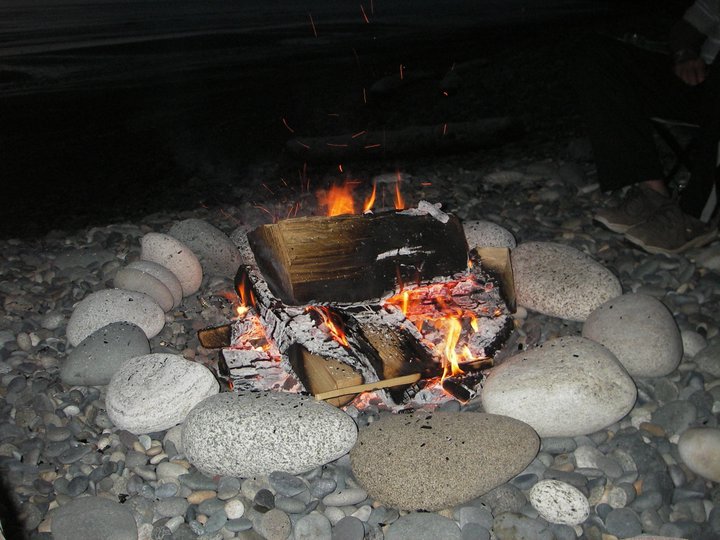
After five decades of being involved in public education in British Columbia, in some capacity, it is clear that we have come a long way toward making schools work better for more students, and it is also clear that we still have a lot of work to do. Far too many students are struggling to acquire and demonstrate foundational academic skills. The achievement gap between Indigenous and non-Indigenous learners is not closing (see the latest How Are We Doing Report? from the Ministry of Education and Childcare), and students who are already marginalized due to factors such as neuro-diversity and developmental exceptionalities (including dyslexia), language and cultural differences and low socio-economic status, suffer most. Yes, we lack control over many of the factors that contribute to the challenges students, teachers and school communities face, which is precisely why we need to focus on where we can affect change. We must consider how we might shift our educational and instructional policies and practices to align with what the evidence about literacy, and learning in general, is telling us. There is just too much at stake not to. It is going to take a concerted, coordinated effort from government, university faculties, administrators, teachers, specialists and other colleagues in various positions in our schools to make the needed systemic changes happen. Thankfully, there is room around the fire for all of us.
If you don’t focus on literacy, there is no equity. None. And I think that’s the main thing that people need to understand. They see these two concepts sometimes as being separate. We’ll get to that when we finish doing the social justice thing. There is no social justice thing without literacy. ~ Kareem Weaver
 Psyched Up North
Leave a comment